

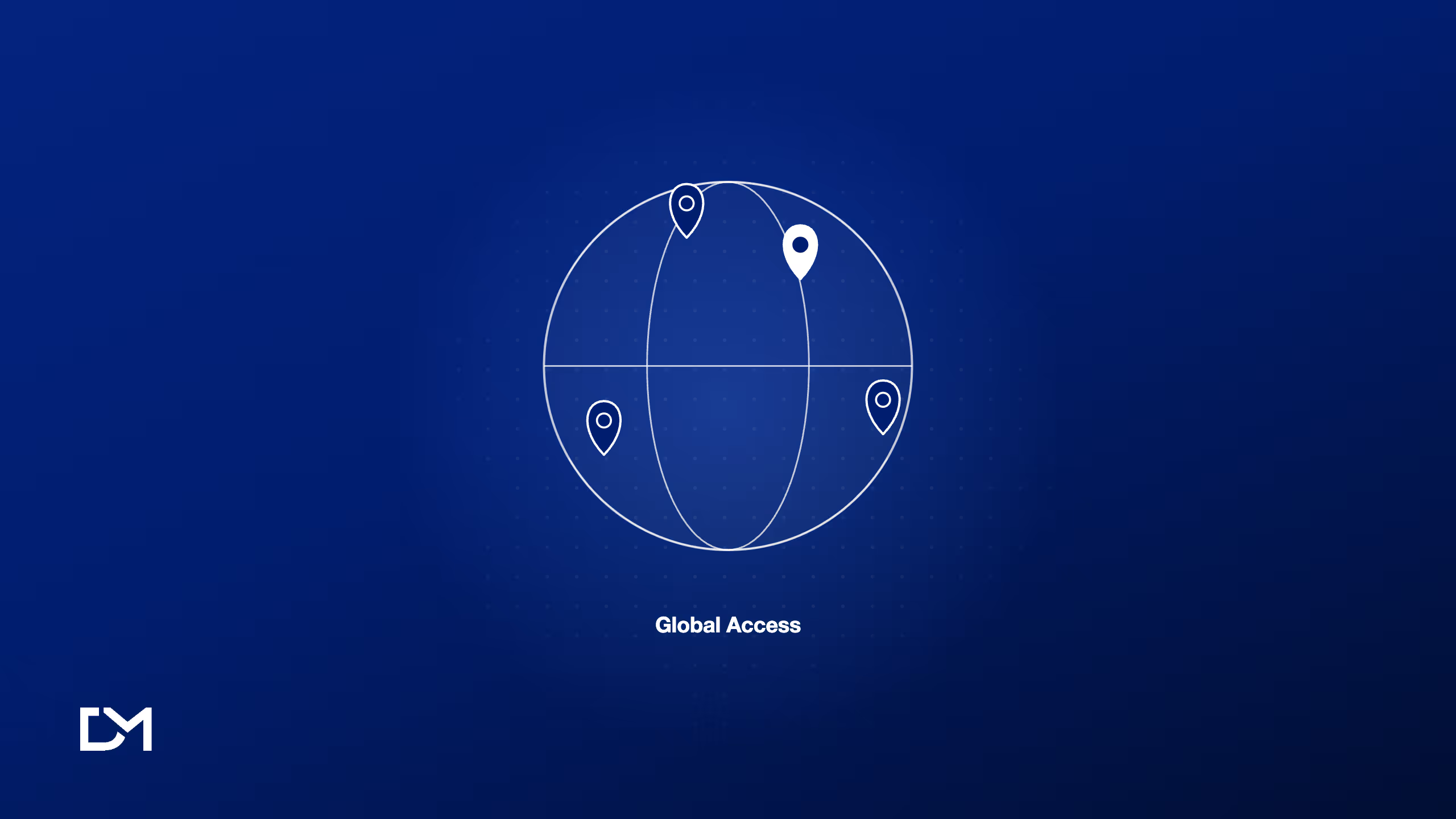
Crypto exchange availability varies significantly by country due to regulatory differences. Major global exchanges like Binance operate in 100+ countries, while others restrict access based on licensing frameworks and local compliance requirements. Understanding which exchanges are available where, and why, matters both for trading strategy and legal compliance.
After working through market crash analysis and trading setup guides, understanding global exchange access becomes relevant for implementing a trading strategy legally and effectively across jurisdictions.
How regulations shape exchange access
Most jurisdictions require exchanges to obtain Money Service Business licenses or equivalent regulatory approval, implement KYC and AML procedures, and in some cases maintain minimum capital reserves or segregate customer funds. The compliance cost of meeting these requirements in every market is substantial, which is why many global exchanges operate fully in some countries and offer limited or no services in others. The US presents the most complex compliance environment, with overlapping federal oversight from the SEC, CFTC, and FinCEN alongside state-by-state licensing requirements. New York's BitLicense is particularly demanding, which is why several major exchanges either exclude New York residents or have obtained the license specifically to serve them.
Singapore, Switzerland, and the UAE have developed comprehensive frameworks that balance innovation with consumer protection, which is why they attract global exchange headquarters and licensing. China prohibits domestic crypto trading. India has implemented heavy taxation that has reduced domestic exchange activity without banning it outright. Many countries are in active regulatory development, creating uncertainty that makes exchange access decisions fluid.
Major exchanges by region
In North America, US investors have access to Coinbase Pro, Kraken, Gemini, and Binance.US as the main regulated options. Canada's regulatory environment is generally straightforward, with most major exchanges operating through registered Money Services Businesses. Mexico has a formal licensing framework under the Fintech Law.
In Europe, MiCA (Markets in Crypto-Assets) regulation is creating a more unified framework across EU member states. Exchanges with MiCA licensing can passport their services across the EU, reducing the current patchwork of national requirements. Kraken, Bitstamp, and Coinbase all have significant European operations. The UK operates under FCA oversight following Brexit, with its own registration requirements.
Asia presents the widest variation. Singapore's MAS framework is one of the most developed globally. Japan's FSA has operated a formal exchange licensing regime since 2017. South Korea has active regulations requiring real-name account verification. China prohibits trading but has a large gray market. India taxes crypto gains at 30% with a 1% TDS on transactions, which has pushed significant volume to offshore platforms.
In the Middle East, the UAE has established free zone frameworks in Abu Dhabi and Dubai that have attracted major exchanges seeking a compliant but innovation-friendly base. Bahrain and Saudi Arabia are developing their own frameworks. Much of Africa and Latin America operates with limited regulatory infrastructure, giving users access to global exchanges but less legal clarity about their status.
Practical considerations
Using exchanges that are not licensed in your jurisdiction carries legal and practical risks. Account freezes, inability to withdraw, and tax reporting complications are all more likely when using platforms without local regulatory standing. The incremental yield or fee savings from an unlicensed platform rarely justify these risks for most investors.
Decentralized exchanges operate outside the jurisdiction-based access model entirely. A wallet anywhere in the world can access Uniswap, Curve, or any other DEX without KYC or geographic restrictions. This does not mean using DEXs is legally unrestricted everywhere, but it does mean the technical access barrier does not exist. For investors in jurisdictions with limited centralized exchange access, DEXs provide meaningful functionality for crypto-to-crypto trading and DeFi participation.
Ready to navigate global DeFi markets regardless of your location? Decentralized Masters teaches the ABN System for accessing DeFi opportunities systematically and safely across jurisdictions.