

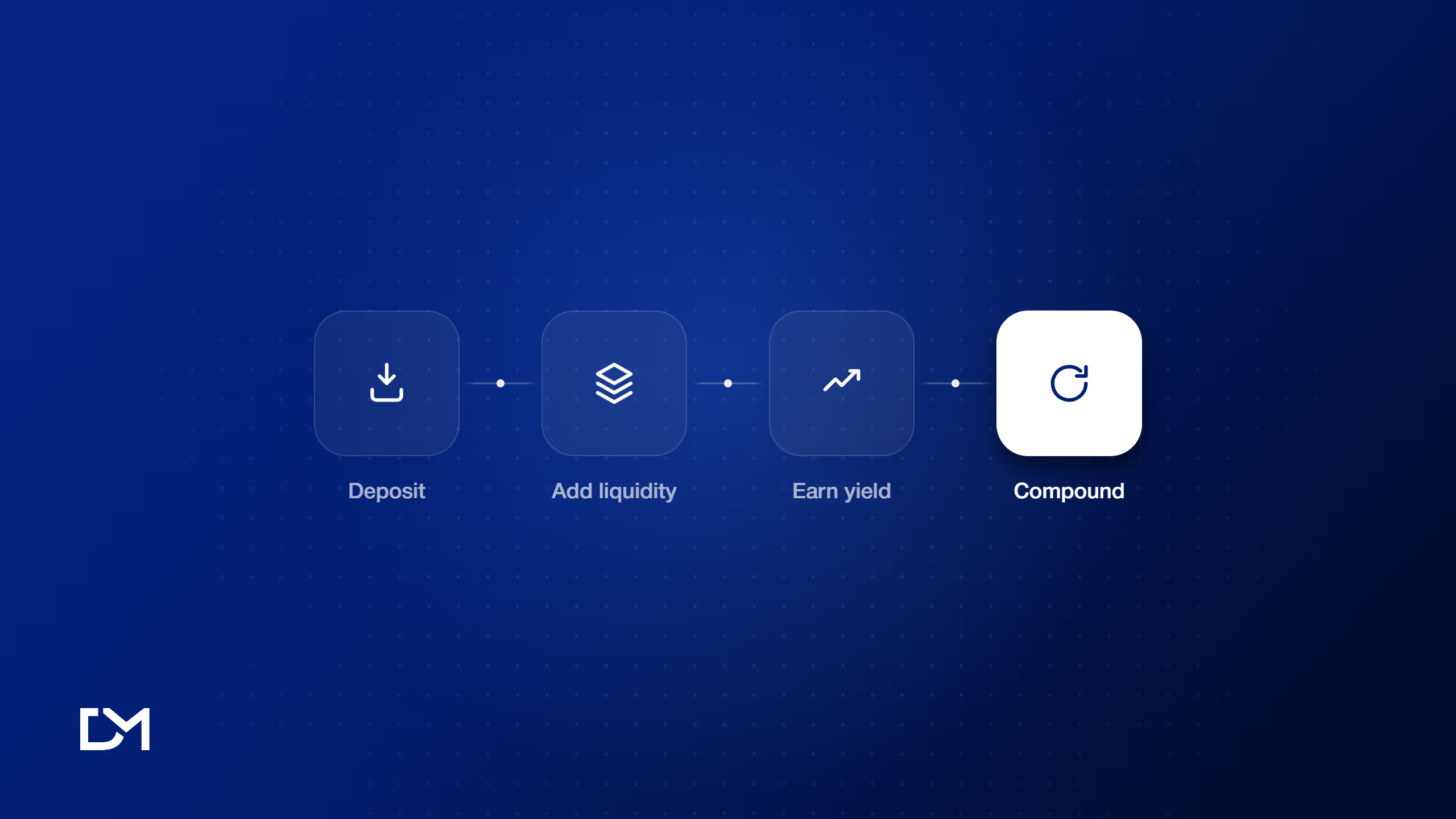
Yield farming lets you earn rewards by putting your crypto to work inside decentralized finance protocols. Stablecoins typically offer 5 to 20% APY. Blue-chip tokens can push that to 50%. The upside is real, but so are the risks.
Choosing a wallet
Your wallet is the foundation of everything. It needs strong security, multi-chain support, and compatibility with the DeFi protocols you plan to use.
For most people, the right setup is two wallets working together. Use MetaMask for everyday DeFi activity. It connects to most protocols and runs as a browser extension. Use a hardware wallet like Keystone Pro for anything you're holding long-term. It stores your keys offline and requires physical confirmation for every transaction.
If you're primarily on mobile, Trust Wallet covers most chains and is straightforward to navigate. Rabby Wallet is worth considering if you want more visibility into transaction risks before you sign them.
Once your wallet is set up, the next step is getting stablecoins.
Buying and moving stablecoins
USDC and DAI are the most widely accepted stablecoins across DeFi. Both are fiat-backed, which makes them significantly more reliable than algorithmic stablecoins under market stress.
Buy through a trusted exchange that supports bank transfers. Many U.S. platforms now offer instant ACH deposits. Before moving funds on-chain, confirm the platform's security measures and whether it's operating in compliance with regulations in your region.
Before transferring any large amount, run a small test transaction first. Ethereum gas fees typically range from $2 to $20. Transferring during off-peak hours keeps costs down.
Staying secure
In 2024, crypto platform attacks led to $2.2 billion in losses. Most of it came down to preventable mistakes.
Use an authenticator app for two-factor authentication, not SMS. Store your seed phrases in multiple fireproof locations, not on your phone or computer. Regularly check and revoke token approvals for dApps you no longer use. Disconnect your wallet from any dApp once you're done with a session.
If you're holding significant assets, a multi-signature wallet adds a meaningful layer of protection. Any transaction requires approval from multiple keys, so a single compromised device can't drain your funds.
Three ways to start farming
As of January 2025, $129 billion is locked in DeFi protocols. Here are the three most accessible entry points.
Stablecoin pools are the lowest-risk option. You deposit stablecoins like USDC, USDT, or DAI and earn fees plus interest. In 2024, fee revenue accounted for 77% of DeFi yields, over $6 billion. Because you're not holding volatile assets, you avoid most of the price risk that comes with other farming strategies.
DeFi lending lets you deposit crypto and earn interest through automated smart contracts. Protocols like Aave and Compound handle nearly $20.46 billion in assets. Rates adjust dynamically based on supply and demand, which means yields can shift quickly. Worth monitoring regularly.
Single token staking is the simplest option. You stake one asset and earn rewards without managing a liquidity pair. On Ethereum alone, approximately $73.4 billion worth of ETH is currently staked, about 23% of the total supply. Ethereum's move to Proof of Stake also cut its energy consumption by 99.84%, making staking more sustainable than it has ever been.
"Token staking is an evolving mechanism that provides financial incentives, governance participation, and liquidity benefits within blockchain ecosystems."
- Saher, Author at Bitbond
Across all three methods, non-custodial protocols are safer than custodial ones. Spread your positions across multiple platforms rather than concentrating in one.
Managing risk
With $107 billion locked in DeFi as of February 2025, the protocols have scale, but so do the risks. The $625 million Ronin Network hack in 2022 is a reminder that even large platforms can fail.
Before committing funds to any protocol, check whether its smart contracts have been audited by a reputable firm. Research the development team. Look at the platform's history and how it responded to past incidents. Analyze token distribution and vesting schedules. Concentrated ownership is a warning sign.
"As with anything in life, if something is too good to be true, it likely is. Understand how yield farming works and all of the underlying risks before participating."
- Jay Kurahashi-Sofue, VP of Marketing at Ava Labs
Impermanent loss is the other risk to understand before entering any liquidity pool. It happens when the prices of your deposited tokens diverge significantly from when you deposited them. The Terra Luna collapse in 2022 showed just how severe that divergence can get.
To reduce your exposure: stick to stablecoin pairs like USDC/USDT, focus on high-volume pools where trading fees offset losses, and look for protocols that offer impermanent loss protection.
Access control failures in Q1 2025 alone resulted in $1.63 billion in losses. Diversification is not optional. It is your main defense.
Optimizing your returns
Once your strategy is running, the question is how to make it more efficient without adding more manual work.
Yield aggregators automatically compound your returns and reduce gas fees by batching transactions. They are particularly useful for passive investors who do not want to manually reinvest rewards. Protocol scanners surface the highest APY opportunities across platforms in real time, which is more useful for active traders adjusting positions frequently. Portfolio trackers give you a consolidated view of performance across chains, useful for anyone managing multiple positions.
Tools worth knowing: APY.vision ($29/month) for LP position management, Defi-Lab for strategy simulation (free tier available), and Nansen.ai ($149/month) for deeper on-chain analytics.
To keep returns growing: monitor APY fluctuations regularly, rebalance based on performance data, and watch gas fees. They can quietly eat into yields on smaller positions.
Tax reporting
Starting in 2025, the IRS requires Form 1099-DA for digital asset transactions. Capital gains and losses go on Form 8949 and Schedule D. Earned income from farming goes on Schedule 1 or Schedule C. All airdrops must be reported, even ones you did not request.
Crypto tax software takes most of the manual work out of this. TokenTax starts at $65/year. ZenLedger and Cryptio are options for higher transaction volumes. Worth setting up before your positions get complicated.
Where to start
If you are new to yield farming, start with stablecoin pools or single-token staking on an established, audited protocol. Both keep your exposure to impermanent loss low while you learn how DeFi positions behave.
Research the platform before depositing. Set up your wallet properly. Use automation tools to compound returns once you are comfortable. And never concentrate everything in a single protocol. Even the well-established ones run into problems.
"Never put all your eggs in one basket. Diversifying your funds across multiple DeFi protocols spreads the risk and minimizes losses in case of platform failures."
- Hacken
The potential is real. So is the discipline required to capture it safely.